
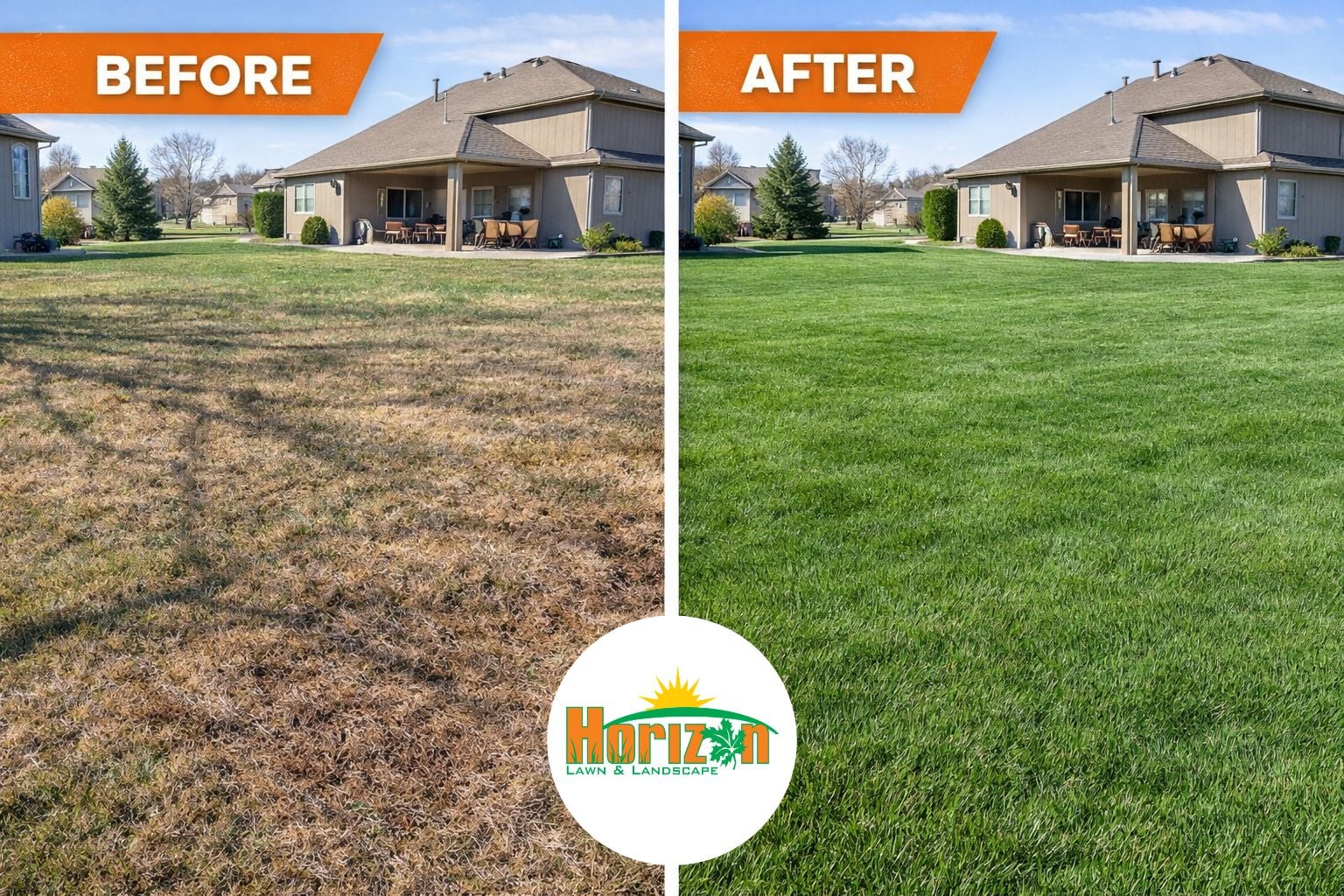
If you’ve stepped outside recently and thought,
“Something is seriously wrong with my lawn…”
You’re not imagining it.
Across the entire Kansas City metro, homeowners are seeing the same thing:
brown, patchy, uneven lawns that looked perfectly fine just weeks ago.
Before you panic or assume your lawn is dead, take a breath.
This is a widespread seasonal issue, and your lawn is very likely going to recover just fine.
Let’s break down exactly what’s happening.
What Happened to Lawns in Kansas City?
The short answer: freeze burn.
Kansas City experienced one of the most dramatic temperature swings of the year. After several weeks of mild, spring-like weather, lawns had already started to wake up, green up, and actively grow.
Then temperatures dropped fast.
We’re talking teens and single digits almost overnight.
That combination is exactly what causes freeze burn in grass.
As explained in the Horizon Lawn & Landscape update, when cold weather arrives gradually, grass has time to “harden off,” strengthening its cells to survive freezing conditions. But this sudden drop didn’t give lawns that chance.
The result?
- Grass cells rupture
- Leaf blades become damaged
- Lawns take on a brown, scorched appearance
And just like that… your lawn looks like it gave up on life.
Why Some Areas Look Worse Than Others
You may have noticed your lawn isn’t evenly damaged. Some areas still look green while others look rough.
That’s not random.
It comes down to microclimates in your yard.
According to the report, areas that were:
- Shaded
- Covered by snow longer
- Lower in elevation
…were naturally insulated and protected.
Snow actually acts as a protective blanket for grass. Areas that stayed covered avoided the worst of the freeze, while exposed areas took the full hit from wind and extreme cold.
So if your lawn looks patchy, that’s actually a good sign. It means parts of your turf stayed healthy.
Is My Lawn Dead or Will It Grow Back?
This is the question everyone is asking.
Here’s the honest answer:
Your lawn is almost certainly not dead.
What you’re seeing is surface-level damage, not root failure.
The important parts of your grass:
- Crown
- Root system
…are still intact in most cases.
That means as temperatures stabilize and conditions improve, your lawn will begin to recover naturally.
No dramatic rescue plan needed.
No emergency lawn replacement.
Just patience.
How Long Does Lawn Freeze Damage Take to Recover?
Most lawns in Kansas City will bounce back within:
2 to 3 mowing cycles
That’s typically a few weeks once consistent spring growth kicks in.
You’ll start to see:
- New green blades pushing through
- Brown areas slowly filling in
- Overall color evening out
What You Should (and Should NOT) Do Right Now
This is where people accidentally make things worse.
Let’s keep it simple.
What To Do
1. Be patient
Your lawn knows how to recover. Give it time.
2. Mow slightly shorter on the first cut
This removes damaged grass and allows healthy blades to come through faster.
3. Water consistently
Kansas City has been dry, so steady moisture helps recovery.
Not too much. Not too little.
4. Reduce foot traffic
Avoid stressing already damaged areas while they’re healing.
What NOT To Do
Don’t panic fertilize
Throwing fertilizer at a stressed lawn too early can do more harm than good.
Don’t overwater
More water does not equal faster recovery.
Don’t assume it’s dead
This is one of the biggest mistakes homeowners make this time of year.
Why This Is Happening Across the Entire KC Metro
If you’re wondering whether this is just your yard… it’s not.
This is a metro-wide weather event.
Multiple lawn care companies across Kansas City are reporting the exact same conditions on their clients’ properties.
So if your neighbor’s lawn looks just as rough, that’s your confirmation.
When Should You Call a Lawn Care Professional?
Most of the time, you don’t need to.
But it may make sense to have a professional take a look if:
- Areas don’t improve after several weeks of growth
- You see thinning that doesn’t fill back in
- You want to speed up recovery with proper timing of treatments
A good lawn care program will handle fertilization, aeration, and seeding at the right time, not just the fastest time.
Final Thoughts: Your Lawn Isn’t Ruined
It just got caught off guard.
Kansas City weather is unpredictable, and this type of rapid temperature swing is exactly the kind of thing that causes temporary lawn stress.
The key takeaway:
This looks worse than it actually is.
Give it a few weeks, follow the basics, and your lawn will come back.